
When Words Aren’t Enough

20131102-233708.jpg
I’m dreading going to worship tomorrow. To be honest, I’m dreading even going to church. I’ve done a good job avoiding this day, but now I have to face it.

Tomorrow marks the end of a significant chapter in the life of our congregation. Handt Hanson, worship leader, songwriter, colleague, and friend is leading his last worship service; starting Monday there will be a new director of worship and music at Prince of Peace. My journey with Handt goes back to the mid-80s. I remember the first time I met him. I was touring the church as I was interviewing for a youth ministry position, when we stopped by his office, not more than a storage room, and chatted. That day I sensed his humble spirit and servant heart, but little did I know the influence he would have on my life and the church.

As a pioneer in contemporary worship, Handt led our congregation to reimagine worship, sharing his learnings with thousands of church leaders along the way. Drawing on his understanding of worship and Lutheran theology, Handt taught me more about worship then any seminary class. Decades of worshipping with his leadership helped me understand how Lutheran liturgy could be fresh and meaningful each week. Both have left their mark in me. And today as I travel the country, I continually run into people who know Prince of Peace because of Handt’s contribution to rethinking worship.

But Handt’s more than a worship leader. His gifts as a musician and songwriter marked many unforgettable moments, some tragic in nature, and shaped many people’s understanding of faith and life, most of which were young people. Working alongside Handt, I witnessed firsthand how these transformational gifts often emerged out of ordinary moments and particular occasions. Yet even in the ordinary, the Spirit of God was present and when gathered communities joined in singing, the notes and words transcended the moment and drew our attention to GOD’s presence in our midst. My wedding, my daughter’s baptisms, friend’s funerals, and milestone moments in my life all have the imprint of Handt’s music; and I am not alone.

Yet Handt’s more than a church leader and colleague. Like many, I am able to call Handt a dear friend. As his friend, I am thrilled for this, his next, chapter in life. More time with his beloved wife and family, yes. New ways of being present with his grandchildren, what could be better? Not tied to the rigorous church schedule so he can travel with Kathy, sounds great. From this perspective, I rejoice. For his family, I’m excited. For him, I see new dreams emerging.

But for the church, and for our congregation, today I grieve. And personally, I’m experiencing what feels like a death. And to quote a song from a friend, ‘Broken hearts never die. They just feel that way for awhile. ‘Til the healing begins, you want to cry. The tears you feel will dry, your broken heart will mend. The king of hearts is your friend.’ It’s OK to grieve, but there’s something more here. Handt would not want the focus to be on him, but on the one who mends broken hearts; the one in whose name we gather each week.

So tomorrow, I will go to worship and I will celebrate Handt and I will lament the ending of this chapter in our life together. But I will also trust God is in this next chapter, of Handt’s life and our congregation. Thanks Handt. And thanks be to a God for your service to GOD’s church. It’s been a blessing.
Three Life Lessons

I spent the afternoon hearing stories from church leaders about the hard times and awesome moments of ministry. They had my attention and my heart. It was an amazing opportunity and reminded me of the two-sides nature of Christian community today – how both sin and grace are present in our congregations today.

Still dwelling in those stories tonight I saw a video on Facebook which lifted up three basic lessons for living. The three lessons are learning to say I was wrong, I’m sorry, and I love you. Living out these three commitments is counter-cultural in so many ways, but clearly are things we place central in our home since our girls were young. And I got thinking – what if our communities of faith, our congregations, held these three commitments as central to their life together? How would holding these life lessons as central change the hard times? How would it deepen the awesome moments?

Think with me for a bit. What would it mean for people of faith to be bold in saying to one another, “I was wrong.” In a culture where everyone is trying to save face, what if we acknowledged our human nature, our sinful selves, and owned up to our shortcomings. And what if that was followed up with two simple words – “I’m sorry.” I’m sorry I snapped at you when I was tired. I’m sorry for giving advice when you wanted me to just listen. I’m sorry for not asking your opinion. How would these two words change Christian communities? How would it change our personal relationships? And then with those two phrases still lingering in the air, what would sharing an authentic expression of love – an “I love you” spoken and acted out, do to cement the encounter?

So as we start a new month, a new season, at home and in our congregations, how
might we embed these life lessons into our daily living?

For those interested in seeing the video, here it is: http://www.derekwebb.com/WSL/sep_03

Brave

How might you be brave today?

So much of our life is about playing it safe. Be it in relationships, leadership, or living our faith, playing it safe is easy but usually comes up short. Think about it. If we played it safe, would we risk being the first to say ‘I love you’ or learn something new? If we played it safe, would we go on adventures or make new friends? If we played it safe, would we share our faith with a stranger or serve at a homeless shelter?

Living brave takes many forms. It can be following a dream, revealing your true self in public, or telling someone your opinions. Whatever the form, being brave awakens us and reminds us of the power we have to live fully, both for ourselves and others. And living brave can be contagious.

Fear is just one of the many obstacles to living brave. Convenience, practicality, and lack of imagination might be others. Pushing past these obstacles is half the battle to being brave.

As a person of faith, I want to live brave. Each day this week, I’m going to find a way I can live brave. Will you join me? (If we need some inspiration see this Sara Bareilles’ video.)

Brave

Words, the Water in Which we Swim

I’m on a writing leave and am spending a lot of time reading, writing, and editing words. This process was gotten me thinking about language, and more specifically our use of words. This little reflection was written a few weeks ago. I share it with you as an encouragement not only to think about words, but especially thinking about the role words have in our relationships and in our life of faith.

Words, the water in which we swim

We swim in a world filled with words.

There are virtual words – Email, Facebook, and Twitter are ecosystems filled with words. Here words tell stories, make declarations, and connect people. Spontaneous, random, informative, and personal, these virtual arenas thrive on words. Words are a critical economy in these public spheres.

There are spoken words – words which fill the air. At the dinner table, in the classroom, in meetings, on the bus, and in the line at the grocery store, you can’t get away from words. Spoken words help us order lunch, share our feelings, exchange information, and paint a picture of the future. ‘Invisible’ in many ways, the words which roll off our tongue are connected to us, while they also have a power all their own. Discovered at an early age, spoken words give humans agency.

There are printed words – words written in letters, contracts, newspapers, and books. Each collection of printed words is crafted and edited. Sealed in a particular time, printed words hold ideas, concepts, stories, emotions, and agreements. With lingo specific to an audience, words on paper capture the latest happenings, expose a person’s heart, announce a group’s shared commitment, or state an organization’s identity.

There are unspoken words – words in our head. These words point to worries, dreams, hopes, concerns, and disappointments. Some words in our head are spoken in our own voice, others are in the voices of coaches, teachers, parents, and peers. Whether locked inside or released into the world, these words impact. Words in our head motivate, support, criticize, question, build up, and calm.

Words, words, everywhere. We swim in a world of words. Yet I take words for granted. As significant and creative as words can be, I often don’t give words the respect they deserve. I read with little regard for the craft of writing; speak without thinking; tweet on the run. However when a song catches my attention, I stop, transported across time and remember the power of words. Watching the evening news, it is words which remind me of how fragile life is. And a simple, “I love you” at the end of a phone call always warms by heart.

What would happen if we more attentive to words – our words, others words, and the words around us?

Today…Speak intentionally. Wonder about words. Appreciate the art of language. And, most importantly, listen for words. And, if you are willing, share what word or phrase impacted you today?

Working with or Living with a 20something?

If you are engaged in ministry with, supervising an intern, or hiring a 20something adult, what should you know? If you have a 20something person living in your home or are trying to parent them, what’s similar and different to being in your 20s from years ago?

This TedTalk, by Dr. Meg Jay, is eye-opening. And could foster great conversation. Watch it. And then if you are in your 20s or work with or live with someone in their 20s, offer your thoughts.

Vacations and the Role of Time and Space

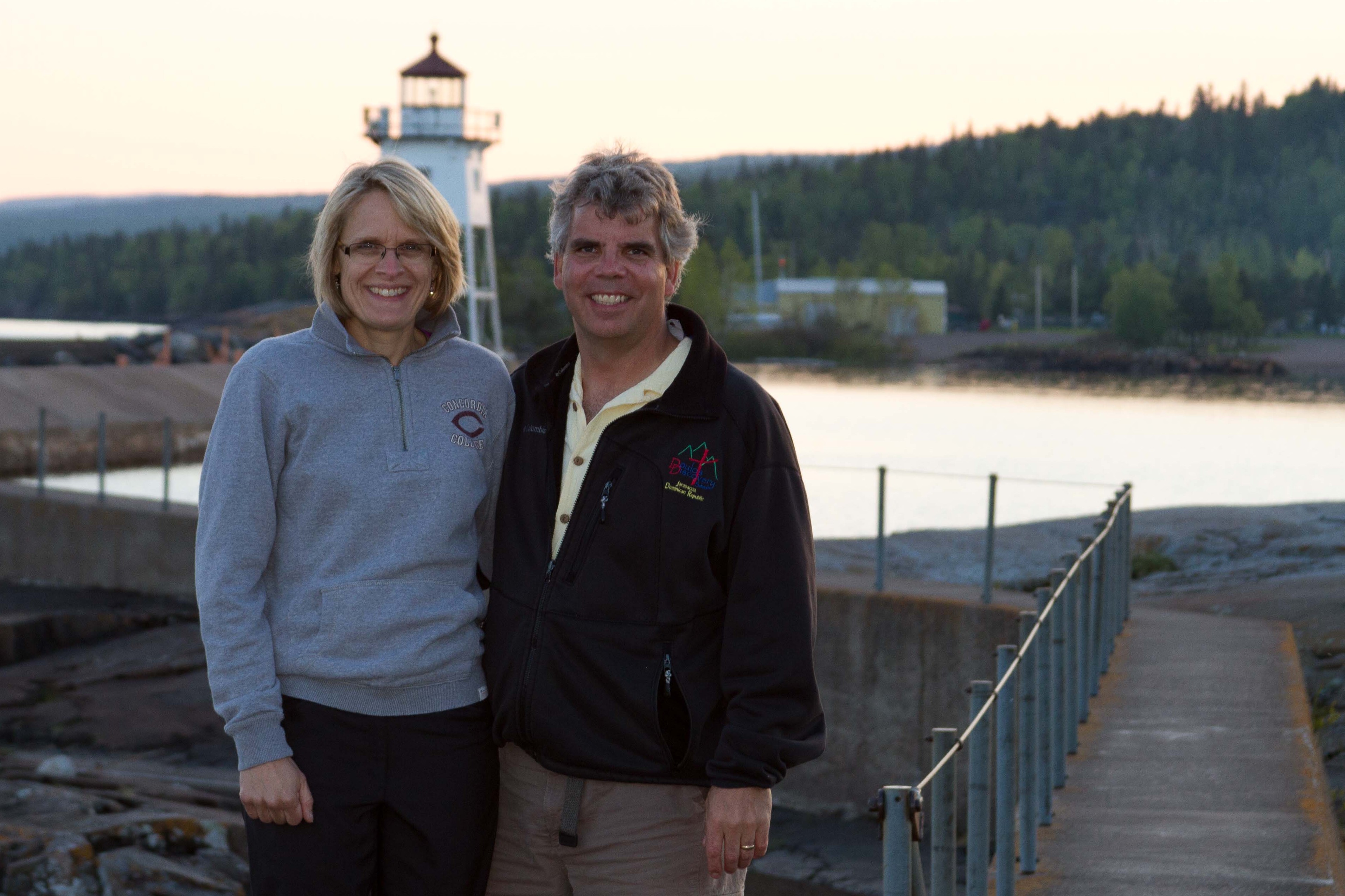
I just returned from a much needed three day get-away with my husband.  We traveled “up north” to the north shore of Lake Superior to celebrate our 21st wedding anniversary and my (49th – ouch) birthday. It’s territory we’ve traveled before – as a couple, with family, and with friends. Over the past 25 years many memories have been made along the trails, lakes, and shores of the territory between Two Harbors and the Gunflint Trail. And while the pictures of Gooseberry Falls, birch trees, and the great lake don’t seem to change much, many things have.

Each day as we hiked and explored the various state parks and hiking trails, I found myself turning a bend or approaching a waterfall and having a flashback. The place was the same, but the time different. These flashbacks were accompanied by stories; stories of people who’ve been meaningful in our lives and each was situated within some season of our life. There was the one trip we made with friends before we were married; there was the trip with extended family; there was the canoe trip cut short because the bear ate our food the first night; there were the trips when our girls were small and we made them explore the trails; and there were the times we’d come alone with friends.

Over the three days, there was only one trail we hiked that we hadn’t been on before. But this trip was not a repeat of the past, it was unique. Yes, in some ways the trip mirrored past trips. Yet, even as the stories of days gone by echoed in our heads, this trip was filled with its own shape and character. How can that be? It’s an issue of time and space.

These days away reminded me how space holds our story. Driving past the outfitter of the last canoe trip we took (the one where the bear ate our food), I swear I could see our kids and the families we traveled with running around the parking lot as we drove by. Years have passed since that trip, but seeing that space brought me back to that time in seconds. There was a church we attended, a bakery we ate at, or a beach we’d stopped at to throw a rock or two.

In the same way, hiking the trail we first hiked with our friends the year before we were married reminded me of how today, two decades later, we are not the same. Much has happened in our lives – we’ve experienced many things, our bodies are older, and our relationship more mature. And that reflection caused me to pause. Time signifies movement and journey. And traveling across time, at least placing snapshots of one’s life next to each other, calls forth gratitude and appreciation in a way ordinary life often misses.

And then we return home. To the familiar, similar yet changed. Yes, I’m refreshed, but it is more than that. Like the rivers we hiked along, it’s the same river…but it’s not the same time for the river. I’m not the same person returning home as when I left. I left tired, and return renewed with a different perspective.

So tonight, I prepare to reengage with my familiar routine, conscious of time and space. Wondering how this renewed perspective can offer insights into my world at home. How am I letting space, this space, hold aspects of my story? And how am I appreciating the precious gift this moment in time offers?

Tonight I created an experience. I traveled back in time. I took my 17 year old out cruising in my parents convertible, something I did regularly as a 17 year old. No, it was not the same…but in some ways it was. The lakes were the same, the streets were the same, but I was not. Time had changed me. I shared a bit about being 17 with my daughter, but mostly I drove and listened, as she talked. Tonight, the car held my story, our story. We were making memories.

How might you, as we celebrate Father’s Day, honor time and space? How might you make memories, memories which ground your life in the present time in concrete places? How might you create memories with family and friends this summer? And how might you see anew the precious gift this moment, ordinary or not, gives us?Image

Terri  

Link

The importance of Family Meals

Family Meals Remain Sacred in the Face of Splintered American Lifestyle

Many of us grew up with meal time as “sacred” time for family. Some of us liked it, others of us hated it, but most families did some version of it. Today shared family time around a meal is not the norm. But studies say it’s a health practice. Our family still does value time shared around meals. Sometimes friends join us, sometimes it’s chaotic, and sometimes we do it in public places. I love this project on reimagining this simple, but core practice. Check it out!