When Words Aren’t Enough

20131102-233708.jpg
I’m dreading going to worship tomorrow. To be honest, I’m dreading even going to church. I’ve done a good job avoiding this day, but now I have to face it.

Tomorrow marks the end of a significant chapter in the life of our congregation. Handt Hanson, worship leader, songwriter, colleague, and friend is leading his last worship service; starting Monday there will be a new director of worship and music at Prince of Peace. My journey with Handt goes back to the mid-80s. I remember the first time I met him. I was touring the church as I was interviewing for a youth ministry position, when we stopped by his office, not more than a storage room, and chatted. That day I sensed his humble spirit and servant heart, but little did I know the influence he would have on my life and the church.

As a pioneer in contemporary worship, Handt led our congregation to reimagine worship, sharing his learnings with thousands of church leaders along the way. Drawing on his understanding of worship and Lutheran theology, Handt taught me more about worship then any seminary class. Decades of worshipping with his leadership helped me understand how Lutheran liturgy could be fresh and meaningful each week. Both have left their mark in me. And today as I travel the country, I continually run into people who know Prince of Peace because of Handt’s contribution to rethinking worship.

But Handt’s more than a worship leader. His gifts as a musician and songwriter marked many unforgettable moments, some tragic in nature, and shaped many people’s understanding of faith and life, most of which were young people. Working alongside Handt, I witnessed firsthand how these transformational gifts often emerged out of ordinary moments and particular occasions. Yet even in the ordinary, the Spirit of God was present and when gathered communities joined in singing, the notes and words transcended the moment and drew our attention to GOD’s presence in our midst. My wedding, my daughter’s baptisms, friend’s funerals, and milestone moments in my life all have the imprint of Handt’s music; and I am not alone.

Yet Handt’s more than a church leader and colleague. Like many, I am able to call Handt a dear friend. As his friend, I am thrilled for this, his next, chapter in life. More time with his beloved wife and family, yes. New ways of being present with his grandchildren, what could be better? Not tied to the rigorous church schedule so he can travel with Kathy, sounds great. From this perspective, I rejoice. For his family, I’m excited. For him, I see new dreams emerging.

But for the church, and for our congregation, today I grieve. And personally, I’m experiencing what feels like a death. And to quote a song from a friend, ‘Broken hearts never die. They just feel that way for awhile. ‘Til the healing begins, you want to cry. The tears you feel will dry, your broken heart will mend. The king of hearts is your friend.’ It’s OK to grieve, but there’s something more here. Handt would not want the focus to be on him, but on the one who mends broken hearts; the one in whose name we gather each week.

So tomorrow, I will go to worship and I will celebrate Handt and I will lament the ending of this chapter in our life together. But I will also trust God is in this next chapter, of Handt’s life and our congregation. Thanks Handt. And thanks be to a God for your service to GOD’s church. It’s been a blessing.

It’s been a week

images copy 4

It’s been a week. Busy by all accounts, as many are. But being busy is not what has me tired tonight. Rather it is something about the nature of the busyness.

As a multi-tasker, and parent, I’m used to juggling a variety of tasks. Grading paper, getting groceries, going to a tennis match, organizing the work for a subcommittee, and registering for a conference; so far so good, right? Creating and attending to a to-do list is part of how I stay sane juggling my many and varied responsibilities. But today while teaching on leadership, a light bulb went off.  Accomplishing things is not what wears me down. It is something else.

Going about my work is what I expect to do each day. And, in fact, “work” is life-giving – it is part of how God designed us. We are created to contribute in the world based on our gifts and passions and the community’s needs. Preparing a class session on team leadership, meeting with students around vocational discernment, and planning next year’s curriculum most often are what feed my call as a teacher, scholar, and church leader. And its the same at home; preparing dinner, caring for our house, hosting a high school bonfire, and planning family time are everyday, ordinary ways I help our family create a life based on our values and commitments. And I expect this “work” to be easy some days, and harder others.

But somedays my head hits the pillow and I’m exhausted, defeated, and stretched beyond my means. And often on those days a collision has taken place between my attending to the life I am striving to create and the realities of the environment around me. Maybe it’s an unplanned event, like the resignation of a colleague; maybe it’s a stressor in a relationship, like a disagreement with my daughter; maybe it’s a decision by “the powers that be” that I disagree with, like cutting staff from my team; maybe it’s a shift in leadership or changes in other systems which I cannot stay detached from. The list is long, but what I know is this – with each of these “external” changes, I have to recalculate my internal compass. Maybe it’s just for the day, or the week, or beyond. And this “recalculating” takes energy, and too much recalculating leaves me questioning my direction and wondering where to direct my efforts.

As I lead my life, with my agenda and desires, I’m always balancing my competing commitments, values, and physical limitations. And that in and of itself is hard work. But then at the same time, I have to attend to the competing commitments, values, and limitations of the system/s I’m living within. When things are fairly predictable, I make it through the day with a dose of confidence. But sometimes the environment asks more of me then I have to give and the recalculating mode works overtime. Sometimes I’m having a good day and I encounter a colleague or friend who is having a hard time and my day turns. Then I go to a politically toxic meeting and come home to a daughter who needs extra attention and I’m done. All might be “normal” in the ebb and flow of that system, but together it’s overload. Then think about the “abnormal’ demands of living systems, when there is crisis or major transition.

On those days, I need to step back, remove myself, and take a break. Sometimes I go into a hole and attack my to-do list. Sometimes I immerse myself in another system, one I’m less emotionally or relationally attached to. Sometimes I bury my head in a book for the night. Sometimes I just go to bed and try again in the morning. Whatever the strategy, it’s time to get some perspective, giving myself some time, and a break from the recalculating. And then, in due time, take another run at the situation.

Today, I invite you to do two things. First, take a look at your to-do list (and if you don’t have one, write down the one that’s in your head). Look at it, pray over it, talk with friends and family about it, and wonder if that’s the to-do list that makes most sense in your life right now. Is your list the “agenda” you want shaping your everyday life. And second, take stock of the environments in which you spend most of your time – your home environment and personal relationships, your work and/or school environment, and the environments of the “other” places you invest your time and passion (maybe it’s a church community or a non-profit initiative).

This weekend, I’m away from home for time with family and learning with other colleagues. And I have the opportunity to do some such reflecting. And Monday, as I return, I hope to reenter with a rethought agenda and recalculated perspective. What about you? Will you join me?

Everyday Leadership

Are you wondering if you are a leader? Are you concerned that people in the congregation you serve don’t see themselves as a leader? What happens when leaders are “them” and not “us”? These are not only great questions, but fundamental to understanding how to empower others and inviting them into making a difference in the world.

Recently I stumble across this great TedTalk on Everyday Leadership. It’s funny, but it’s also challenging all of us to rethinking leadership. Check it out.

Open Hands, Open Hearts

20130930-071432.jpg
Yesterday I was a guest preacher in a congregation I had never been to before. I entered as I do many congregation, a friendly stranger, but left with more than I had anticipated – with a deep sense of connection to God and insight into what it means to be the body of Christ.

On all accounts, this congregation was welcoming. Several people came to me and introduced themselves as I entered. Many talked with me afterwards, sharing a bit about their lives and their concerns. A young boy engaged me in conversation as he sold me a candy bar. If I was assessing their hospitality, this congregation would have scored high. Yet interestingly enough the most transformational part of my experience was not their hospitality, but rather came in an ordinary and unexpected moment.

In addition to preaching, I served communion. As is typical in many congregations, people came to the front of the Sanctuary and knelt at the communion rail. As they did they rested their open hands on the railing and waited to receive the bread and wine. Moving slowly from person to person, breaking off bread as I went, I placed a piece in their hand and said, ‘the body of Christ broken for you.’ Simple, traditional words which turned opened up an extraordinary experience. You see, as I placed the bread in their hands and said these words, my eyes moved from their hands to their face. As their eyes met mine, my heart was touched, softened, nudged. With each new person the experience became more personal. As I made my way, I noticed something…not only were their faces unique, but so were their hands. Each pair of hands had its own character, told it’s own story. Many of the hands were twisted as a result of arthritis. Some were the hands of laborers, big and rugged; others were refined, soft and polished. Some hands were the hands of children, others assisted the elderly. Yet all were open.

Our church, the ELCA, has lifted up a mantra, ‘God’s Work, Our Hands.’ One of the ways this mantra has come to life was with hundreds of congregations beginning this fall season of ministry putting their faith into action, using their hands to speak GOD’s love in the world. We’ve been highlighting hands for months, but crazy as it may sound, I hadn’t paid much attention to actual hands. I mean really looked at people’s hands. That is, until today.

An interesting aspect of this story is this congregation’s location – New Orleans. It was one of the two Lutheran congregations hardest hit by Katrina. I, like many of you, have lifted this city and its people up in prayer regularly since Hurricane Katrina hit. I have seen first hand the devastation in the early months and I have witnessed its spirit renewed more and more each time I return. New Orleans is coming back. Sure this transformation did not happen overnight, and it was and is not easy, but the people of New Orleans opened their hands to others and put their hands to work. And today its a new day.

Over the years, as I have prayer, visited, and worked alongside the people of this city, I have come to a deeper understanding and appreciation of its culture and spirit. And yesterday, as I placed bread in the hands of its people and shared the promise of GOD’s love for the broken and vulnerable, I saw this spirit in the flesh. This is a community of people who use their hands and open their hearts.

Over our lifetime, our hands will tell a story. What story will they tell? Will we be willing to open our hands to God and our neighbor? Will we let our hands and our hearts be connected? Can our hands tangibly express the unbelievable promises of God’s love for us and the world? Ordinary, useful, weathered, hands are agent of GOD’s love. Yes, it is God’s mission for all the world to know, truly know, God loves them unconditionally. And we, GOD’s people, have been created each with a unique pair of hands. This is the body of Christ at work.

Wisconsin, here I come! Teaching Lay School

So what are you doing this weekend? Over 100 leaders from congregations in Wisconsin are coming to Chippewa Falls to learn about the church and wonder about change and I get to be with them. If you are interested in what we are up to, check out the presentations below, or see more on the initiative at Lay School of Ministry

Presentations:

NW.WI.change and NWWI.Faith,formation.missional.age

Perspectives on the ELCA

20130908-213721.jpg
This weekend is like the new year for churches. ‘Rally Day,’ as many call it, marks the shift in seasons – from summer to fall – and includes changes in worship, as well as things like Sunday School and confirmation ministry.

And while many congregations celebrate this change of seasons, my church – the ELCA (Evangelical Lutheran Church in America) – is also rethinking its practices. As we celebrate 25 years as a denomination, we also recognize our rich 400 years history. We see the changes in the culture, as we also honor tradition. We recognize our call to gather with other Christians, and our command to go into the world. We love God, but also know we are to love our neighbors.

I’m curious about what will emerge in the years ahead, and I’m keeping my eyes and ears open for hints of what’s coming. Many of you are too. Today I’d like to share some of what has caught my attention. These two pieces describe my church, my denomination, my tradition, in a way that gives me hope. Perhaps it might offer you hope as well.

1. “Day of Service helps Lutherans return to their roots.” An article in the StarTribune about the ELCA initiative for congregations to celebrate this new year by serving in their community.
http://www.startribune.com/local/222829931.html

2. A Krista Tippett interview with Pastor Nadia Bolz-Weber, a non-traditional pastor speaking about Lutheran theology, liturgy, and innovation for the sake of sharing the good news of Jesus.
http://www.onbeing.org/blog/nadia-bolz-weber-talks-tattoos-resurrection-and-gods-disruption-video/5921

Three Life Lessons

I spent the afternoon hearing stories from church leaders about the hard times and awesome moments of ministry. They had my attention and my heart. It was an amazing opportunity and reminded me of the two-sides nature of Christian community today – how both sin and grace are present in our congregations today.

Still dwelling in those stories tonight I saw a video on Facebook which lifted up three basic lessons for living. The three lessons are learning to say I was wrong, I’m sorry, and I love you. Living out these three commitments is counter-cultural in so many ways, but clearly are things we place central in our home since our girls were young. And I got thinking – what if our communities of faith, our congregations, held these three commitments as central to their life together? How would holding these life lessons as central change the hard times? How would it deepen the awesome moments?

Think with me for a bit. What would it mean for people of faith to be bold in saying to one another, “I was wrong.” In a culture where everyone is trying to save face, what if we acknowledged our human nature, our sinful selves, and owned up to our shortcomings. And what if that was followed up with two simple words – “I’m sorry.” I’m sorry I snapped at you when I was tired. I’m sorry for giving advice when you wanted me to just listen. I’m sorry for not asking your opinion. How would these two words change Christian communities? How would it change our personal relationships? And then with those two phrases still lingering in the air, what would sharing an authentic expression of love – an “I love you” spoken and acted out, do to cement the encounter?

So as we start a new month, a new season, at home and in our congregations, how
might we embed these life lessons into our daily living?

For those interested in seeing the video, here it is: http://www.derekwebb.com/WSL/sep_03

Leadership Lessons

20130829-093901.jpg

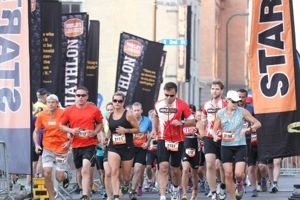
Sunday I participated in my first race of the year, a duathlon in downtown Minneapolis. It was a hot, humid August morning. As racers made their way to the starting line, the race organizers warned us that they’d be keeping an eye on the weather and if the heat index got too high, they’d call the race for safety reasons.

Now I was not in my best racing condition and hadn’t trained in this extreme heat. So, I had mixed emotions regarding this announcements. But as my waved headed to the starting line, I promised myself I’d listen to my body…and committed to holding safety above a competitive time. And then I was off on the first leg of the race.

Just about two hours later I crossed the finish line exhausted and dehydrated. As I found a place to sit down and rest I learned 10 minutes before they’d made the decision to stop people before the final leg. I’d finished, but over half of the participants would not have the same opportunity.

What followed was a series of comments – some in favor, some in opposition. As I returned to the transition area to get my gear, I passed one of the event staff. I paused and once he got off the walkie-talkie, I thanked him for his work. Then I made my way to breakfast and air conditioning.

It wasn’t until later in the day when I made the connection between the race and ministry. Linsky and Heifetz remind us that leaders are always putting themselves on the line. Many of us know what they are talking about – leading is dangerous, and not going to win any popularity contests. But here are three things I’m taking away from my experience on Sunday, things I will use as I enter into a new season of ministry this fall.

Leaders are called to keep their eye on the big picture. As a participant, I had a job to do – run my race. But as I was focused on my role, there were all kinds of other things going on that I couldn’t (and shouldn’t) pay attention to. It was the job of others – the medic staff, the volunteers, the police officers – to pay attention to traffic and weather and making sure there was enough water. And their paying attention to those things enabled me to do my thing. In ministry, there are people who’s role it is to teach Sunday School, for example. Their role is to love and teach kids. But other people have other roles – like cleaning the building and planning worship. And some ministry leaders are called to step back and see the big picture, just like the race staff. These leaders have to watch and listen, they have to make decisions, often weaving together information from various other folks, so they can lead the whole.

Leaders have to care about the good of all, not the good of a few. Many of the participants stated that the decision to finish or not should have been left to the individuals themselves. And yes, many of the participants could have made the right choice for themselves. But speaking for myself, I didn’t realize until later in the day how dehydrated I had gotten. I was taking in fluids all during the race and I was paying attention to my body. But too many elements were different than my previous training runs and I was not in the best position to make the call, for me or for others. Leaders understand that, they understand their role is to care for the widest audience. At times, caring for the whole means watching out for the vulnerable, those on the edge, those who may not have the opportunity to speak up for themselves. This was the right thing for the whole.

Leaders decide and move on. Once the decision to cancel the last leg of the race was made, everyone stood behind that decision and worked to carry it out. And there was no apologizing. Yes, there was explaining and communicating, but there was no hedging. They had warned us, they had watched the weather, and it had gotten to a turning point. And the leadership made a decision and stood by it. Thanks! I appreciate that. And standing by one’s decision does not mean being without compassion about the individuals impacted. No, quite the opposite. The decision was made in order to care about the individuals…and that was part of the message communicated in various ways. If we, as leaders, know what our calling is, and have a framework for leading, then we have what we need to make the hard decisions when the time comes.

So, as we move into September, and another fall season of ministry, I challenge you to lead. Know leading isn’t going to make you popular and, in fact, it might be dangerous. But also know that leading is important…and without it, ministry won’t have the environment it needs to thrive.

One view of Church

20130816-000217.jpg
I’ve been in downtown Pittsburgh for 4 days. What a beautiful city in the summer with the rivers, parks, and outdoor restaurants. But the scenery and food are not what is most memorable about this trip.

I’m in Pittsburgh because I’m a member of the Evangelical Church in America (ELCA) and I’m representing Luther Seminary, the school where I teach, at the national gathering of ELCA Lutherans. My role is easy, I’m an advisor, a resource person. I’m not sure what I’m suppose to do, but here’s what I’ve done. I’ve Listened to pastors and lay leaders from across the ELCA talk about their faith, their love for the people in the communities in which they worship, and their passion for the church (collectively and locally) to make a difference in their lives, in their local communities, and in the world. They are filled with excitement, open to new ideas, and willing to change. And I have also had the opportunity to share what one little piece of the church, a school with a mission for educating leaders for Christian communities, is doing to contribute to the greater mission. I’ve had dinner with alumni, connected with colleagues, and begun dreaming with people about our future as a church.

Always being Made New‘ is the theme, and as this church celebrates its 25th birthday, it is putting those words into practice. Yesterday, for example, the voting assembly elected its first female presiding bishop (or top leader of the church). I was on the phone with my daughter as the results were coming in and I had to pause and soak in the moment. I have lived through the birthing of this expression of the Lutheran church and in my lifetime we have gone from not letting women be pastors to now having the top leader be a woman. Wow!

But as historic a moment as that was, it has not been the highlight. The highlight for me has been the under 35 crowd – the youth and young adults who have shown up, stepped up, and spoken up. (And tweeted, and blogged, and shared links, and…you get the picture.) Do they care about church governance? Some do, others don’t. But dealing with governance issues is only a small part of this gathering. What they do care about is the gospel, about putting faith into action, about global issues and local realities, about how we as a church handle our resources, and how much we are willing to change our patterns as we attend to these things. They are not naive, they know structures are needed to tend to such things, so they come to the table and ask really good, and often new, questions. They push and they listen. They ask for your opinion and offer their own. They can live in ambiguity and tension, but want to keep moving toward something important. I have found their presence refreshing AND helpful.

So as I pack up my things tomorrow night, and return to Minnesota, I do so refreshed and thankful. Thanks to the people who have nurtured these younger adults and listened to them. Thanks to the regional bodies who have entrusted them with real responsibility here, and hopefully at home. Thanks to the assembly for making room and listening to new, and often different, voices. And thanks be to God who reminds us, again and again, it’s the Spirit who makes all things new.